



2026-08-28
classification:Company News
Industry determines where capital flows, while finance determines whether a company can weather the business cycle.
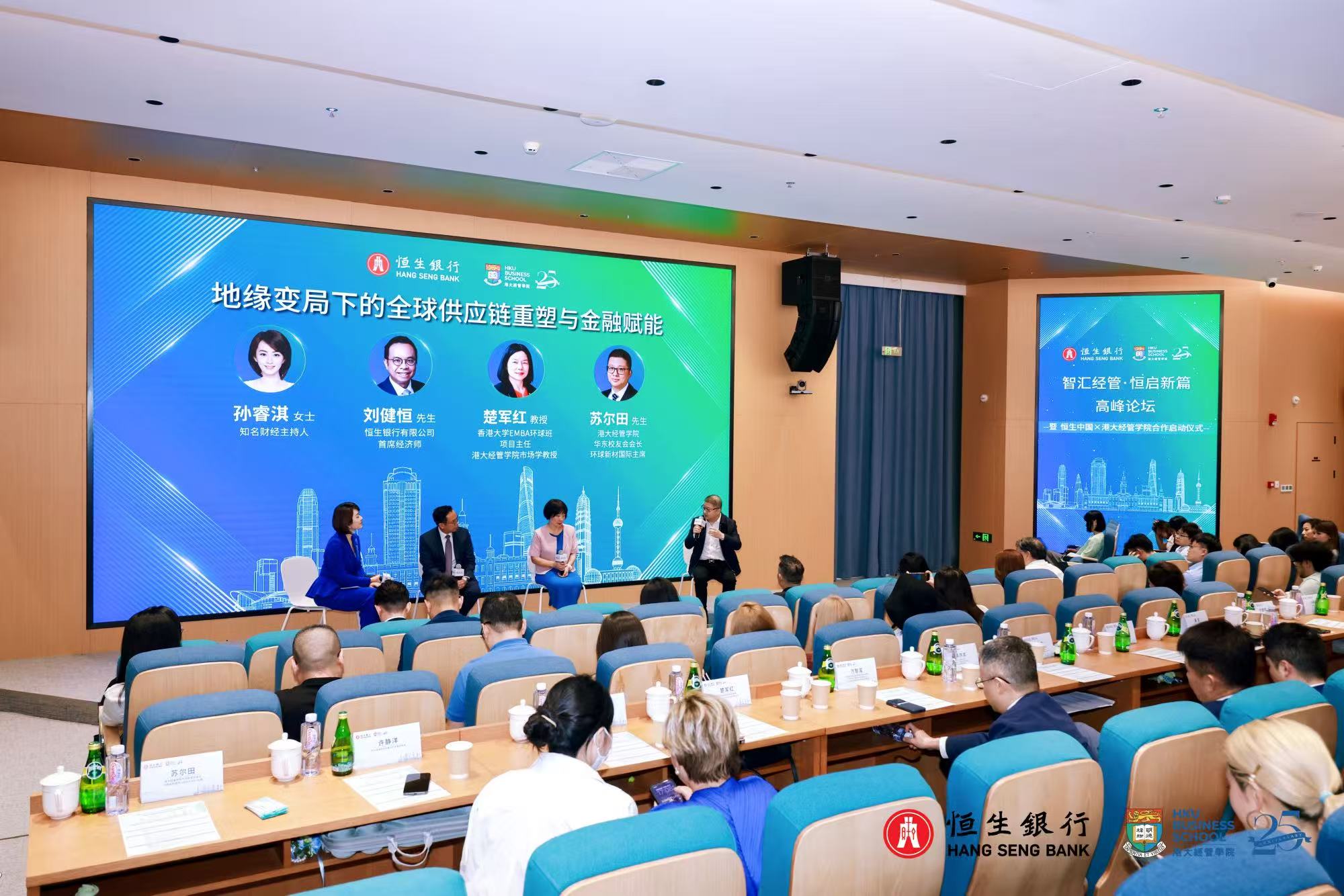
On August 28, “Wisdom in Business Management, Hang Seng Pioneers a New Chapter” Summit Forum, jointly hosted by Business School of Hong Kong University and Hang Seng Bank (China), was held at the Shanghai Center of Business School of Hong Kong University. Su Ertian, Chairman of the Board of Directors of Global New Material International Holdings Limited (06616.HK) and President of the East China Alumni Association of Business School of Hong Kong University, was invited to attend and participated in the panel discussion on “Global Supply Chain Restructuring and Financial Empowerment Amid Geopolitical Shifts.” Drawing on his company’s global practices, Su engaged in in-depth discussions with academic, financial, and industry experts on topics including supply chain restructuring, cross-border mergers and acquisitions, and financial empowerment.
The forum brought together renowned scholars, financial institutions, and corporate representatives, with discussions covering cutting-edge topics such as China’s economy, capital markets, supply chain reshaping, and capital flows. Perspectives from both theory and practice converged on-site, offering fresh insights for Chinese enterprises to enhance resilience and expand global growth in a complex environment.
Supply chain reconfiguration: from “lowest cost” to “risk-adjusted total delivery cost”
Geopolitical dynamics, tariff policies, energy prices, and logistics systems continue to evolve, reshaping the competitive landscape of global supply chains. Su Ertian noted that companies can no longer focus solely on comparing production costs in isolated segments; instead, they should integrate tariffs, energy, compliance, logistics, capital tied up in inventory, disruption losses, and recovery cycles into a single decision-making framework to calculate the “risk-adjusted total delivery cost.”
In his view, globalization is not simply relocating a supply chain from one country to another, but rather upgrading a single “chain” into a multi-regional, multi-node “network” based on market dynamics, customer needs, and risk distribution. Key raw materials, suppliers, production capacity, and warehousing should maintain essential secondary options, striking a balance between efficiency and redundancy. This way, when a particular node faces disruptions due to tariffs, logistics, or geopolitical factors, companies can swiftly switch supply sources, production capacity, and delivery routes.
The most competitive supply chains of the future will not necessarily be those with the lowest single-point costs, but rather resilient networks that ensure uninterrupted supply, flexibility in switching, and recovery capabilities. At its core, this shift involves moving from a pursuit of static cost optimization to building dynamic, resilient networks.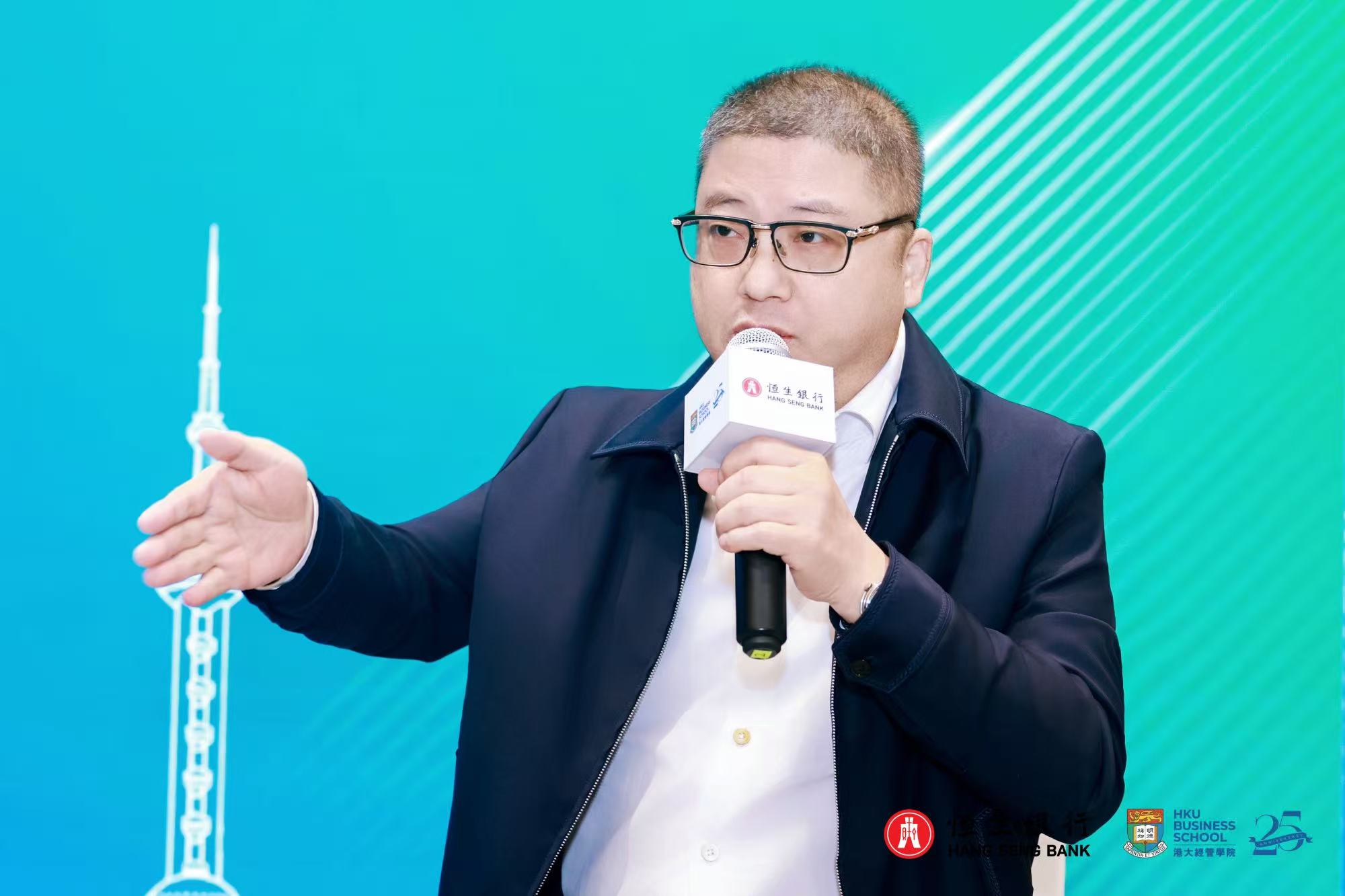
Globalization of capabilities: cross-border M&A is not about “buying territory,” but about “acquiring capabilities.”
Su Ertian believes that Chinese enterprises’ globalization is transitioning from “exporting products” to “globalization of capabilities.” The value of cross-border mergers and acquisitions lies not merely in expanding assets and revenue, but in using capital to buy time and integration to build capabilities—quickly acquiring technological systems, global customers, brand reputation, local teams, and organizational expertise.
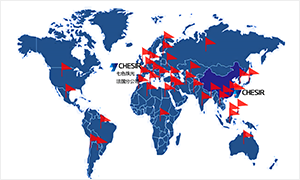
Global New Material International has pursued both organic growth and external acquisitions, successively acquiring control of South Korea’s CQV and completing the acquisition of Merck’s former Global Surface Solutions business in 2025. GNMI now operates across major markets including China, South Korea, Germany, Japan, and the United States. Building such technological expertise, customer base, and organizational capabilities from scratch would typically take many years.
The completion of equity and asset transfer is merely a legal milestone; true operational completion comes when governance, team, systems, supply chain, and customers achieve effective integration; and financial completion is realized only when this integrated stability translates into revenue, profit, and operating cash flow.
Su emphasized that cross-border integration should not simply “Sinicize” overseas enterprises, but rather respect local regulations, culture, and talent. In the early stages of integration, it is essential to first stabilize product quality, supply, and customer trust, then gradually advance coordination in research and development, manufacturing, and marketing, ultimately translating these efforts into tangible business results and cash flow. A merger without local trust is merely an asset; globalization without cash flow support is just a map.
Financial empowerment: the key is not about “giving more money,” but “structural alignment“
When discussing how finance can empower the real economy, Su Ertian stated that financial support should not simply equate to expanding credit or increasing leverage. Truly effective finance involves helping enterprises manage risks and stabilize cash flows, ensuring that their financing structure aligns with asset structure and operational pace. For companies engaged in cross-border operations, the first step is to achieve “four key alignments”:
- The financing currency alignswith the primary operating cash flow currency, reducing the impact of exchange rate fluctuations.
- The financing term should align withthe asset recovery cycle to avoid “short-term loans for long-term investments.”
- Align repayment schedules with operating cash flow cycles to avoid the situation where “profits appear on paper but there’s no cash when it comes time to repay debts.”
- The financing entity, actual place of operation, guarantee arrangements, and repayment sources should be aligned to ensure clear and sustainable funding flows and debt obligations.
For financial institutions, Su suggested that credit assessments should not focus solely on collateral but also consider order quality, customer structure, inventory turnover, overseas cash flow, and multi-regional supply capabilities. While a multi-regional footprint may increase costs in the short term, it can protect orders and cash flow during disruptions, creating option value. Supply chain resilience should be incorporated into credit evaluation and risk pricing, transforming it into identifiable and measurable financial value. Finance that can recognize business capabilities and supply chain resilience is the true finance supporting corporate globalization.
Responding to uncertainty with long-termism
From supply chain to mergers and acquisitions, from organizational integration to capital structure, Su Ertian’s insights follow a clear thread: in the face of uncertainty, companies cannot rely on isolated optimization but must build systemic capabilities that are adaptable, collaborative, and capable of sustainably generating cash flow.
Looking ahead, Global New Material International will continue to focus on its strategic positioning as a “global leader in surface performance and functional materials platform.” Leveraging the Hong Kong capital market and its global industrial footprint, GNMI will pursue both organic growth and external acquisitions, continuously integrating high-quality global technology, customer, and talent resources. It will deepen the integration of innovation chains, industrial chains, and capital chains, strengthening the foundation for high-quality development through a more resilient global operating system.